Release Date:2026-01-16 Page views:141
In today's rapidly evolving new energy vehicle industry, links such as "three-electric" system testing, cooling system verification, and air tightness testing directly determine the performance and safety of the complete vehicle. And in these stringent testing processes, there is a core component that is easily overlooked yet crucial — fluid connectors.
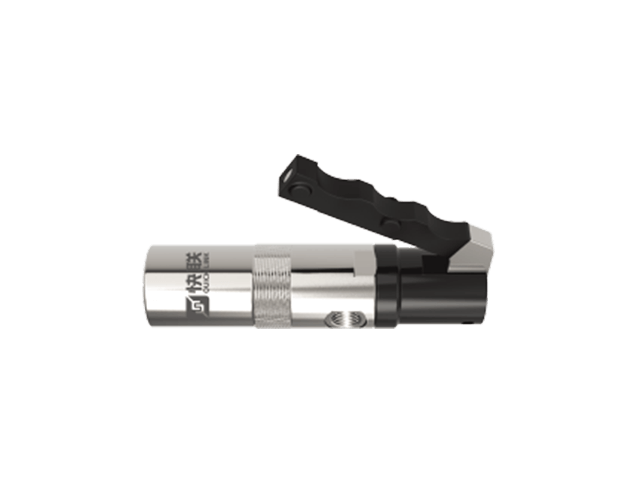
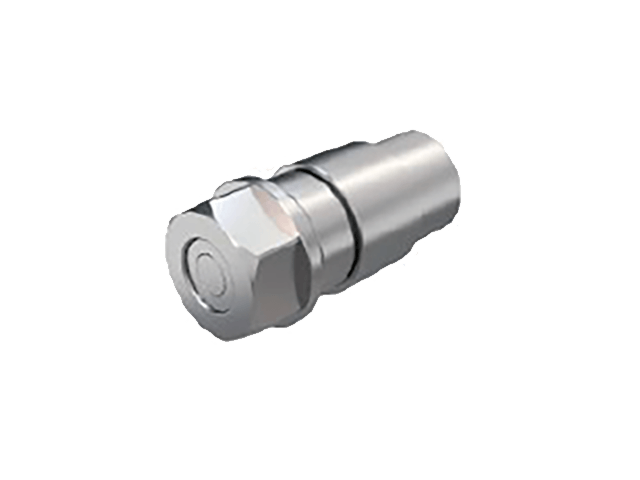
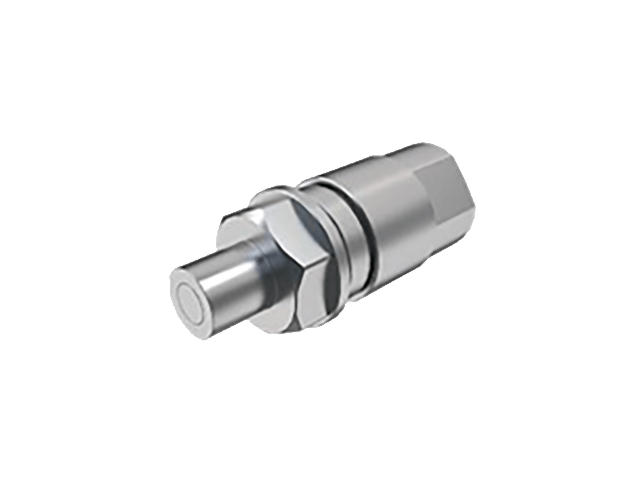
As an experienced player in the field of new energy vehicle test connectors, we deeply understand that fluid connectors for testing are by no means simple "pipeline connectors". They are the "lifeline" for the transmission of test media (coolant, gas-liquid mixtures, etc.), and more importantly, the key support for ensuring accurate test data, efficient test processes, and controllable test safety. Their performance directly affects the success or failure of the entire testing link.
Why do new energy vehicle tests impose such stringent requirements on fluid connectors?
Unlike fluid connectors used in mass production of complete vehicles, the particularity of new energy vehicle testing scenarios places far higher requirements on fluid connectors than industry norms. After all, every leak or failure during the testing process may lead to test interruption, data distortion, or even damage to expensive test equipment and test pieces.
Combined with the core scenarios of new energy vehicle testing, fluid connectors need to meet three "hardcore requirements":
1. Absolutely reliable sealing to eliminate leakage risks: During testing, fluid media are mostly water-glycol coolant, compressed gas, etc., and some scenarios need to withstand high-pressure working conditions. Once leakage occurs, it will not only affect the accuracy of test data but also may cause safety risks such as short circuits in battery packs and damage to motor and electronic control components. High-quality fluid connectors for testing must adopt a multi-seal design to achieve "dry break separation", with plug-in leakage far lower than industry standards to ensure zero leakage.
2. Adaptation to harsh environments and resistance to extreme tests: New energy vehicle testing needs to simulate various extreme working conditions, from temperature cycle shocks of -40℃ extreme cold to +125℃ high temperature, to multi-directional vibration during vehicle operation, and even long-term medium corrosion, all requiring fluid connectors to have super strong environmental adaptability. The main material should be corrosion-resistant and high-strength materials such as 316 stainless steel, and the seals should be compatible with coolant for a long time to ensure service life.
3. Adaptation to high-frequency plugging and unplugging, balancing efficiency and non-damage. In the testing link, fluid connectors need to complete thousands or even tens of thousands of plug-in operations in conjunction with the testing process. They must not only ensure convenient and efficient plugging and unplugging to reduce the workload of operators but also avoid scratching the precision nozzles of test pieces during plugging and unplugging. Therefore, non-destructive locking design, one-hand operable structure, and ultra-long plug-in service life have become the core competitiveness of fluid connectors for testing.
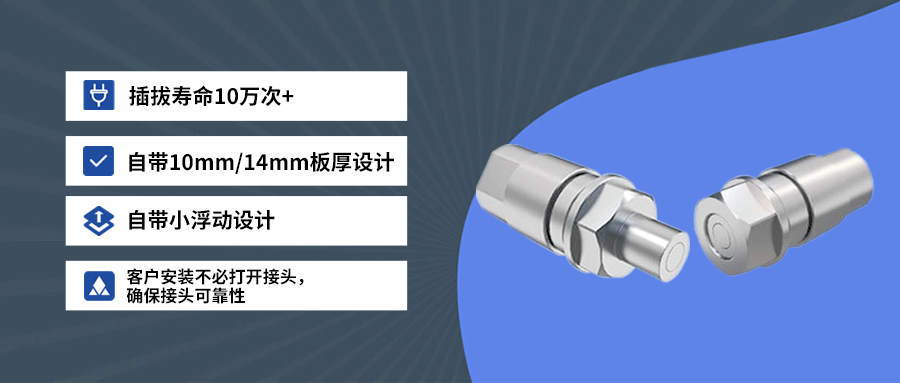
Based on our own technical accumulation in the field of test connectors, we integrate sealing technology, anti-vibration design, and material innovation into every detail of fluid connectors. Our products have undergone stringent tests such as temperature cycling, vibration, plug-in service life, and medium compatibility. Whether it is standardized products for conventional testing scenarios or customized requirements for special working conditions, we can provide efficient full-process services covering "demand docking - sample delivery - after-sales support".
Unlike manufacturers of general-purpose fluid connectors, we have been deeply engaged in the field of new energy vehicle test connectors for many years and know that every detail in the testing link is related to the accuracy and safety of test results. Therefore, our fluid connectors are not simple industrial components, but "customized solutions" tailored based on new energy vehicle testing scenarios.